A property manager once received several complaints about the same glass entrance door.
The comments were surprisingly similar.
People were not saying the door was broken.
They were not reporting noise.
Instead, they kept describing the door as "heavier than before."
The building had been operating for years without major changes. The glass door was still aligned. The handle was intact. Nothing appeared obviously wrong during a quick inspection.
Yet when maintenance staff compared the entrance with another nearby door, the difference was easy to feel.
One moved smoothly.
The other required noticeably more force.
The investigation that followed revealed something many building owners rarely consider: door performance can change long before a component actually fails.
A heavy duty floor hinge may continue functioning while gradually developing characteristics that affect everyday use.
The Problem Often Starts With Dirt, Not Damage
People usually expect mechanical problems to involve broken parts.
In busy entrances, dirt is often the first challenge.
Shopping centers, office buildings, hotels, and public facilities continuously bring dust, moisture, and small debris through their entrances. Most of it goes unnoticed.
Over time, however, these particles accumulate around moving components.
Maintenance contractors frequently discover that doors receiving the highest traffic volumes also collect the largest amount of contamination near floor-level hardware.
Nothing dramatic happens overnight.
Instead, movement becomes slightly less smooth month after month.
Because the change is gradual, building occupants often notice the difference before maintenance teams do.
Weather Can Change Door Behavior
One reason entrance hardware sometimes generates confusing service reports is that the problem appears inconsistent.
A door may feel normal in the morning and different later in the day.
It may operate smoothly during one season but receive complaints during another.
Temperature plays a larger role than many people expect.
Metal components expand and contract.
Lubricants behave differently.
Building structures respond to changing environmental conditions.
A heavy duty floor hinge installed in a sun-facing entrance may experience operating conditions that differ significantly from those of a similar door located elsewhere in the same building.
For maintenance personnel, understanding these environmental influences is often more useful than immediately replacing hardware.
Traffic Creates Wear In Unexpected Places
When people think about door wear, they usually focus on hinges, handles, or locks.
Inspection reports often tell a different story.
Some of the earliest signs of wear appear in locations that users never see.
A door opened hundreds of times each day rarely experiences identical movement during every cycle.
Some people push near the handle.
Others push near the glass edge.
Delivery personnel may use carts.
Cleaning crews may hold the door open for extended periods.
These small differences create uneven forces over thousands of operating cycles.
Years later, those forces can influence how the entrance feels even when no major component has failed.
This explains why two doors installed on the same day sometimes develop very different maintenance histories.
What Building Managers Usually Notice First
Interestingly, building managers rarely identify problems through technical inspections.
They hear about them from occupants.
Comments such as "the door feels heavier" or "it doesn't move like it used to" often arrive before visible defects appear.
Those observations can be valuable.
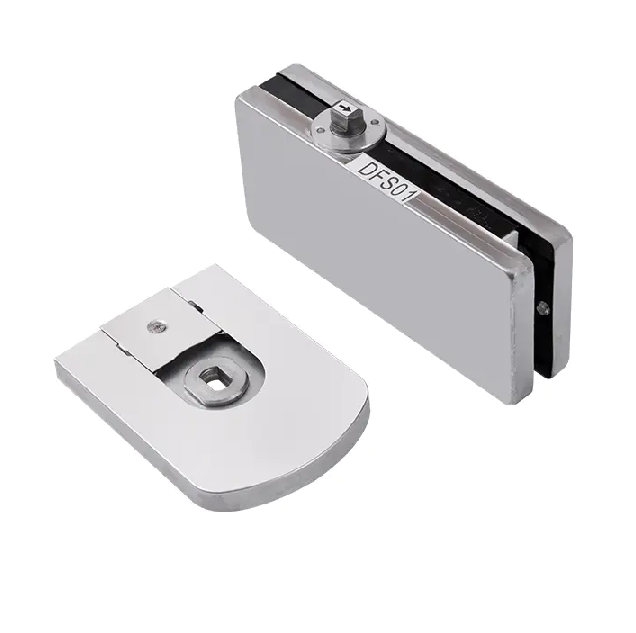
They provide early warning that the entrance system deserves attention.
A heavy duty floor hinge is expected to support large doors and frequent operation, but like any mechanical system, it works within real-world conditions rather than laboratory conditions. Traffic levels change. Buildings age. Environmental conditions shift.
The result is that door performance gradually evolves over time.
For many facilities, maintaining a comfortable entrance experience is not simply about replacing hardware when it breaks. It is about recognizing the small changes that appear long before failure becomes obvious.

 中文简体
中文简体
 English
 русский
 عربى
عربى