A glass door can weigh well over one hundred kilograms.
Yet in many buildings, people push it open with one hand and hardly think about what happens underneath.
The door swings.
It slows down.
It returns to its closed position.
Everything feels natural.
People only notice the hardware when something stops working as expected.
Perhaps the door closes too quickly.
Perhaps it no longer aligns properly.
Perhaps the opening force feels heavier than before.
Interestingly, building maintenance teams often discover that two doors of similar size can feel completely different to use, even when they appear almost identical from the outside.
Part of that difference can be traced back to the floor spring system hidden below the floor surface.
In particular, a double spring floor hinge is often associated with entrance doors that experience frequent daily traffic and require controlled movement in both opening and closing cycles.
The Door Is Not The Same After Installation
Many discussions about door hardware focus on specifications.
Real-world performance is influenced by something else.
Time.
A newly installed door usually operates under ideal conditions. The floor is level. The glass panels are aligned. The surrounding structure has not yet experienced years of temperature changes and building movement.
Several years later, conditions may look different.
Minor settlement can affect alignment.
Traffic patterns can change.
The door may be opened hundreds or even thousands of times each week.
Under these circumstances, users begin noticing differences in how the door behaves.
What feels like a door problem is often a combination of factors working together rather than a single component failure.
This is one reason installers pay attention to the floor spring system during both installation and maintenance.
Small Adjustments Can Change User Experience
Building managers sometimes receive complaints that seem difficult to define.
People rarely say, "The closing speed is 15 percent too high."
Instead, they describe a door as feeling awkward, heavy, or inconsistent.
Those descriptions may sound subjective, but they often point toward measurable changes.
A slight variation in closing speed can influence how comfortable a doorway feels during daily use.
The same applies to opening resistance and final latching movement.
Technicians who regularly service entrance systems know that small adjustments can create noticeable differences.
A double spring floor hinge is designed to help manage these movements throughout the opening and closing cycle, which is why proper adjustment remains important long after installation is complete.
Busy Entrances Create Unique Conditions
Not every door experiences the same workload.
A conference room door may operate only a few times per day.
A retail entrance may operate hundreds of times.
Transportation hubs, office buildings, hotels, and commercial centers create entirely different usage patterns.
High traffic introduces forces that are difficult to appreciate from a product drawing alone.
Repeated movement gradually affects every mechanical system.
Dust enters small gaps.
Temperature changes influence materials.
Moisture levels vary throughout the year.
These conditions become part of the operating environment.
Over time, maintenance records often reveal that entrance hardware is affected as much by usage patterns as by the original design.
When evaluating long-term door performance, facility managers frequently examine the entire entrance system rather than focusing on a single component.
What Maintenance Teams Usually Look For
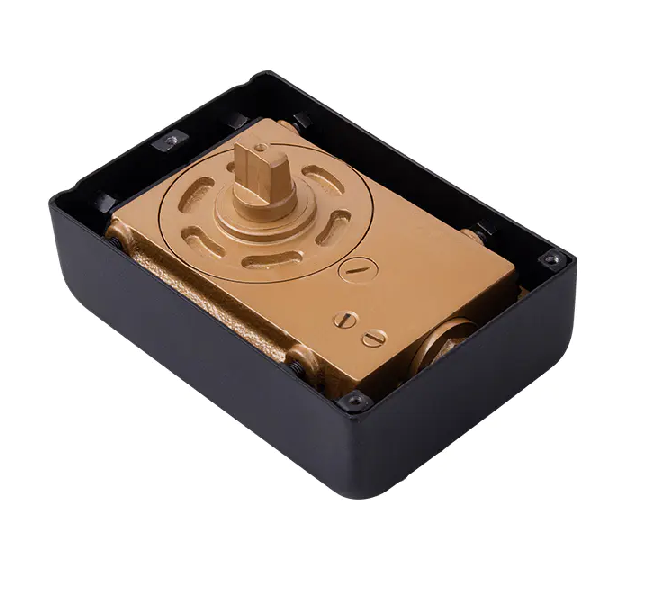
Interestingly, experienced technicians often pay attention to details that building occupants never notice.
They observe whether the door returns consistently to the center position.
They check alignment between the door and frame.
They watch for changes in closing behavior during different times of the day.
These observations can reveal developing issues before users begin reporting problems.
In many cases, the goal is not repairing a failed component.
The goal is maintaining consistent door operation before noticeable performance changes occur.
A double spring floor hinge remains hidden from view for most of its service life, yet it influences nearly every interaction people have with the entrance. When a door feels balanced, controlled, and predictable, few people think about the hardware beneath it. When that feeling changes, however, the importance of the floor spring system quickly becomes apparent.
That is why building maintenance programs often focus on door movement itself rather than waiting for visible failures. The way a door behaves during everyday use frequently provides valuable clues about the condition of the hardware supporting it.

 中文简体
中文简体
 English
 русский
 عربى
عربى